

Maintaining good vision is crucial for our overall well-being, allowing us to enjoy life's precious moments. Understanding common eye conditions is the first step towards preserving your sight, and one such condition is macular degeneration. This progressive eye disease affects millions, and at Total Vision Centers, we believe that education is key to early detection and effective management. Let's explore what macular degeneration is, its signs, symptoms, and how it can be managed.

Understanding Macular Degeneration
Macular degeneration, often referred to as Age-related Macular Degeneration (AMD), is a condition that primarily affects the macula, a small, central part of your retina responsible for sharp, detailed vision. This area is vital for tasks like reading, driving, and recognizing faces. When the macula deteriorates, it can lead to blurred central vision or a blind spot. There are two main types: dry AMD, which is more common and progresses slowly, and wet AMD, which is less common but more severe, involving abnormal blood vessel growth under the retina.
Recognizing the Signs and Symptoms
The early stages of macular degeneration often show no noticeable symptoms, which is why regular eye exams are so important. As the condition advances, you might start to experience blurred vision, especially in your central field of sight, or find it difficult to read fine print or recognize faces. Straight lines may appear wavy or distorted, and colors might seem less vibrant. Some individuals notice a dark or empty area in the center of their vision. These symptoms usually affect both eyes, though one eye might be impacted more severely or earlier than the other.
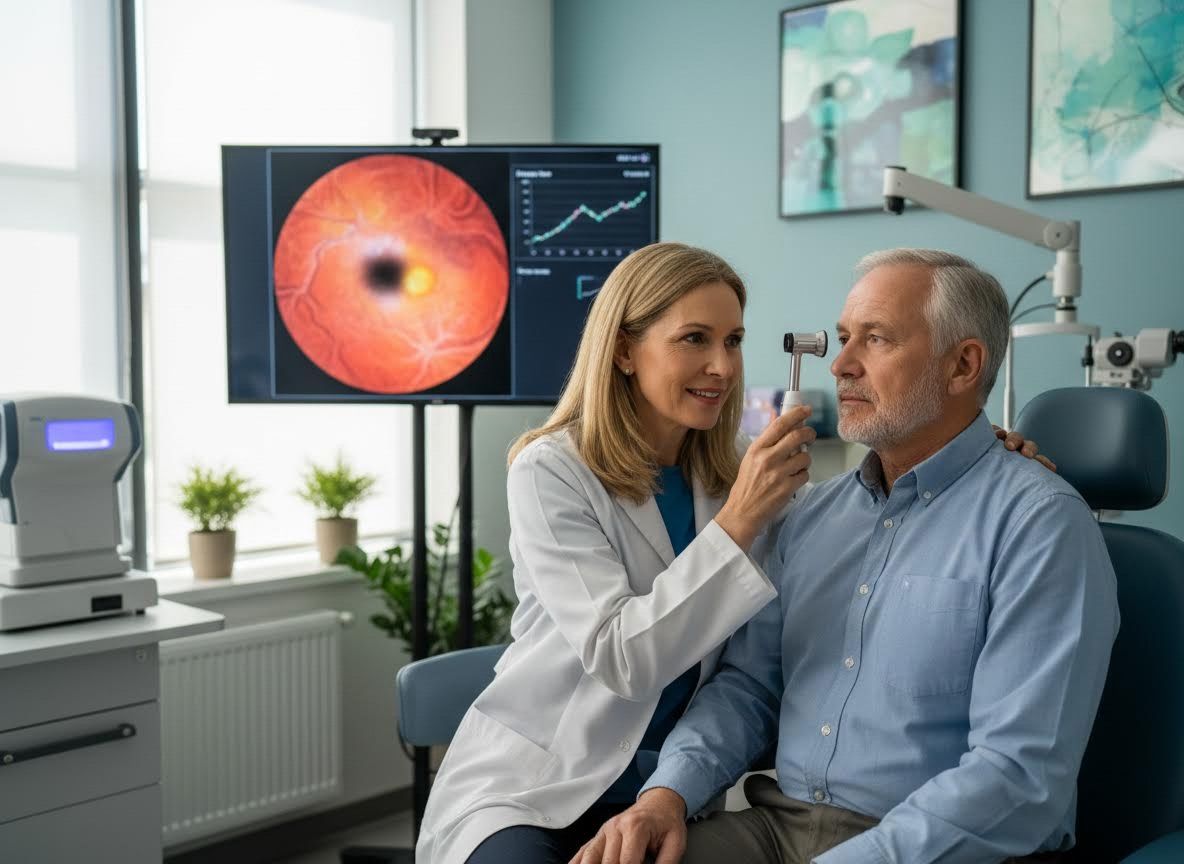
Early Detection Through Comprehensive Eye Care
Detecting macular degeneration early is paramount for slowing its progression and preserving vision. A thorough eye exam conducted by an experienced optometrist is the best way to identify the condition, often before significant vision loss occurs. During your visit to a Springboro eye doctor, specialized tests like optical coherence tomography (OCT) or fluorescein angiography may be used to examine your retina in detail. Regular check-ups allow your eye care professional to monitor changes, distinguish between dry eye and other conditions, and provide timely interventions.
Management and Lifestyle for Macular Degeneration
While there is currently no cure for macular degeneration, various strategies can help manage the condition and slow its progression. For dry AMD, high-dose antioxidant vitamin and mineral supplements (AREDS2 formulation) have been shown to reduce the risk of advanced stages in some individuals. For wet AMD, treatments like anti-VEGF injections directly into the eye can stop abnormal blood vessel growth and leakage. Beyond medical treatments, lifestyle factors such as a healthy diet rich in leafy greens and fish, not smoking, maintaining a healthy weight, and protecting your eyes from UV light can play a significant role. An optometrist can also provide low vision aids and strategies to help you adapt to vision changes.
Understanding macular degeneration and taking proactive steps for your eye health is vital for maintaining your quality of life. At Total Vision Centers, our dedicated team is committed to providing personalized, compassionate care to help you navigate conditions like AMD, or even common issues like myopia. To discuss your eye health concerns or to schedule a comprehensive eye exam, reach out to our knowledgeable team for guidance and support.